Serving Kalispell
Regular routes, no travel surcharge, firm price before anything starts.
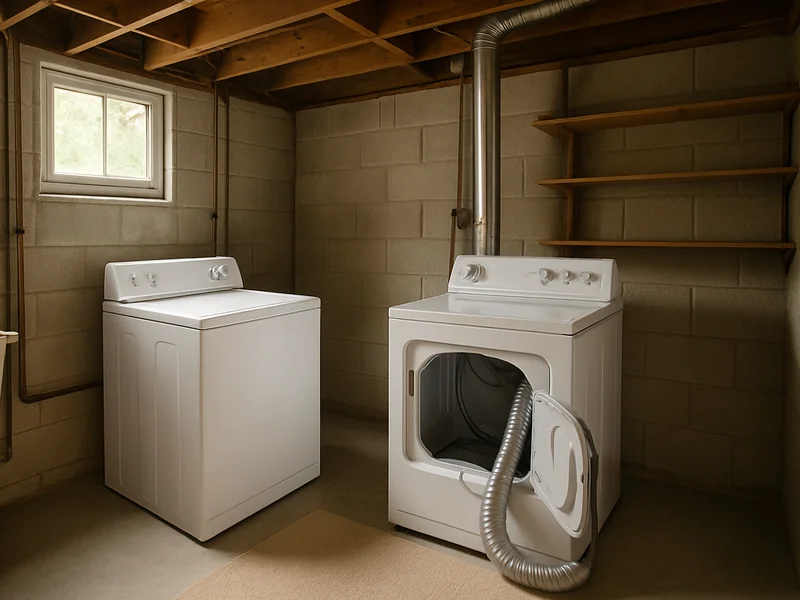
Get a Free QuoteHouses built here before the war were not built with laundry rooms, so the dryer went to the basement. That means a long horizontal run to reach an exterior wall, usually with two or three elbows and a section sagging between joists.
Every one of those is a collection point. Elbows slow airflow and give fibre something to catch on; sags gather both lint and the condensation that forms when warm moist exhaust meets a cold basement wall. Wet lint packs several times harder than dry, and that is what turns a slow dryer into a blocked one.
| Job | Typical price |
|---|---|
| Basement run under 15 feet | $130 - $170 |
| Long or multi-elbow basement routing | $170 - $240 |
| Added to a chimney sweep, same visit | $90 - $120 |
| Exterior hood replaced | quoted on findings |
More on how we do this on the Dryer Vent Cleaning page, or see everything we cover in Kalispell.