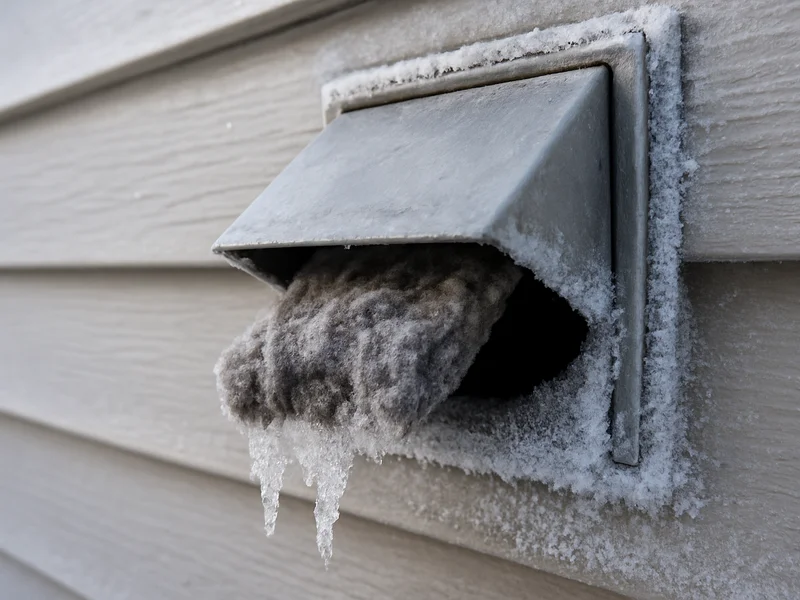
Drying taking two cycles?
That is the first symptom, and it usually shows up long before anything is dangerous. Tell us the duct length and where it exits.
Get a Free QuoteLint is fine dry cellulose fibre packed against warm metal with air moving over it, which is close to a definition of tinder. It gathers at elbows, at the exterior damper, and anywhere the duct sags between joists - all places nobody can see.
We brush the entire run with a rotary head sized to the duct and measure airflow at the exterior outlet before and after. The measurement is the point: it turns "seems better" into a number you can compare against next year. If the duct is crushed, disconnected inside a wall, or run in flexible foil where code wants rigid metal, we tell you rather than cleaning it and calling it done.
What's included
- Full-length rotary brushing, worked from both ends where routing allows
- Airflow measured at the exterior outlet before and after, and written down
- Exterior hood and damper cleared of lint and ice so the flap closes again
- Bird and rodent nesting removed from the outside rather than pushed deeper
- Dryer pulled out, transition hose checked, appliance put back
- Report on crushed, disconnected or improperly routed sections
| Job | Typical price |
|---|---|
| Standard run under 15 feet, wall exit | $130 - $170 |
| Long run, basement routing or roof termination | $170 - $240 |
| Added to a chimney sweep, same visit | $90 - $120 |
| Nesting or heavy ice blockage removal | +$45 - $90 |
| Foil transition hose replaced with rigid metal | quoted on findings |